Our Location
Old Janpad Bhawan, Besides Petrol Pump Bacheli Road, Dantewada (C.G.) 494449

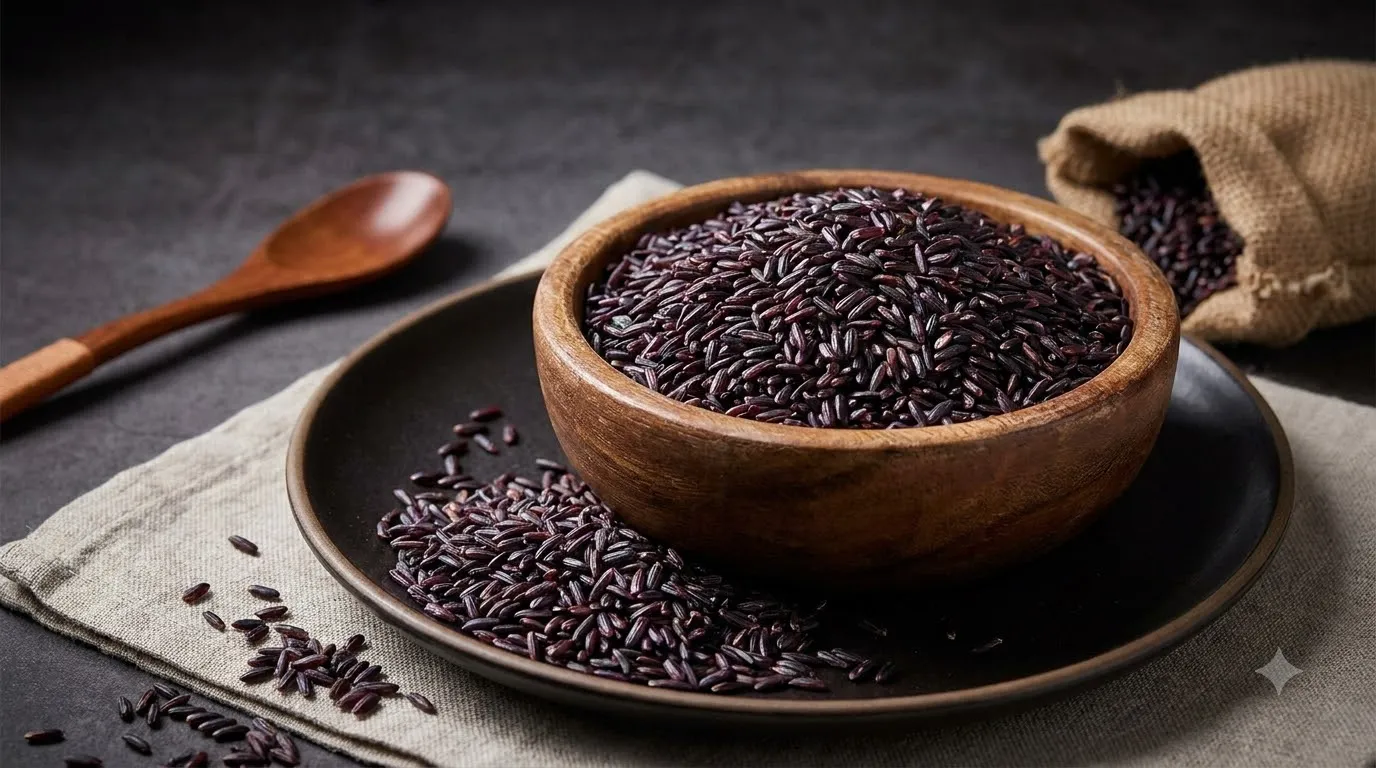
When considering staple carbohydrates, it is vital to remember that not all rice is nutritionally the same. Among the thousands of traditional rice varieties cultivated worldwide, black rice stands remarkably apart even before it reaches the plate.
Its striking, deep purple-black colour comes completely naturally from a group of plant pigments called anthocyanins. This is the exact same family of compounds responsible for the vibrant colours of many berries, red cabbages, and other deeply pigmented foods. But its colour is far more than just visual appeal; it is a direct clue to its incredibly unique phytochemical profile.
Black rice is particularly rich in anthocyanins, with cyanidin-3-glucoside reported as one of its predominant anthocyanins. These naturally occurring compounds possess strong antioxidant activity and have been extensively studied over the years for their potential role in protecting cells from oxidative stress and supporting overall metabolic health.
Furthermore, research surrounding black rice has actively explored its beneficial effects on glucose metabolism, lipid metabolism, inflammation, and even gut health. However, it is important to note that many of these promising findings come from laboratory, animal, or extract-based studies; therefore, black rice should be properly viewed as a highly nutrient-dense whole grain, rather than a medicinal food.
Beyond its unique pigmentation, black rice also provides all the robust nutritional characteristics expected from a quality whole grain. Its outer layers naturally contain dietary fibre, phenolic compounds, and various other bioactive components, while the core of the grain contributes essential carbohydrates, protein, and minerals to the daily diet.
This nutritional profile becomes particularly relevant when the grain is minimally processed. Unlike highly polished white rice, which has much of its nutritious outer grain layers violently removed during milling, an unpolished or minimally milled black rice can retain much more of the naturally occurring compounds that are heavily concentrated around the bran and pigmented layers.
The true dietary value of black rice does not come from forcibly replacing every other grain in your pantry. Rather, it comes from diversity. Rotating different whole grains and traditional cereals can beautifully introduce a much wider range of nutrients and plant bioactive compounds into the diet.
Black rice offers something particularly distinctive in this rotation: a naturally pigmented grain that perfectly combines the comforting role of a staple carbohydrate with the benefits of a rich source of plant compounds. In the world of nutrition, colour can sometimes tell us a powerful story. The deep purple-black appearance of black rice vividly reflects the presence of anthocyanin pigments, turning an everyday staple into a fascinating example of how traditional food diversity can directly contribute to our own nutritional diversity.
At Aadim, this traditional grain is brought straight from Chhattisgarh’s diverse agricultural landscape to modern kitchens, proudly celebrating food that is deeply rooted in biodiversity, traditional cultivation, and outstanding nutritional value. It is a grain that is black by nature, rich in tradition, and remarkable by composition.
How to Include Black Rice in Your Daily Diet: