Our Location
Old Janpad Bhawan, Besides Petrol Pump Bacheli Road, Dantewada (C.G.) 494449

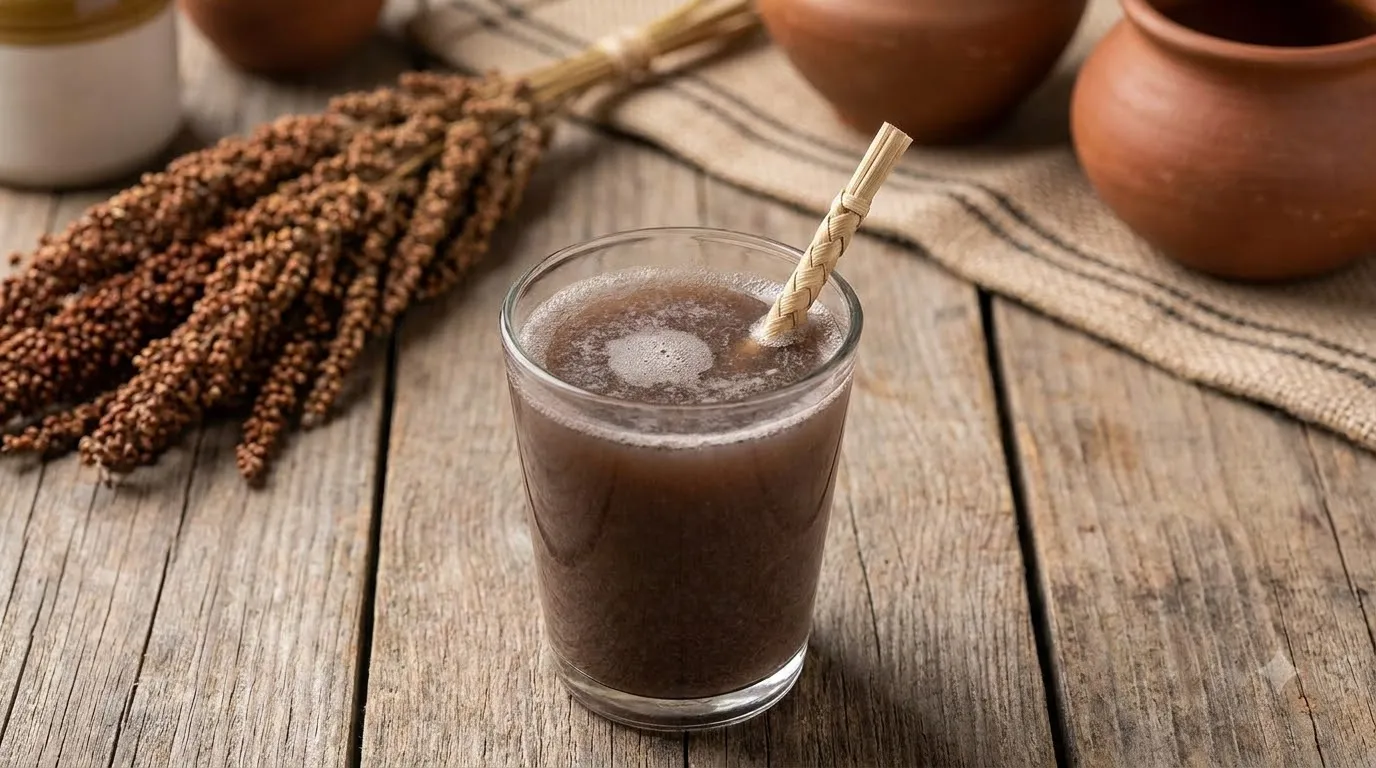
Long before nutrition labels and modern functional-food trends took over supermarket shelves, traditional communities were already developing sophisticated food practices that made grains more useful, nourishing, and adaptable. Ragi Pej is one such brilliant example.
Made from finger millet (Eleusine coracana), this traditional gruel has been consumed across parts of central and eastern India, including deep-rooted tribal food traditions. While its nutritional value begins with the ragi itself, it is the traditional processing, particularly fermentation, that adds a fascinating new layer to its story.
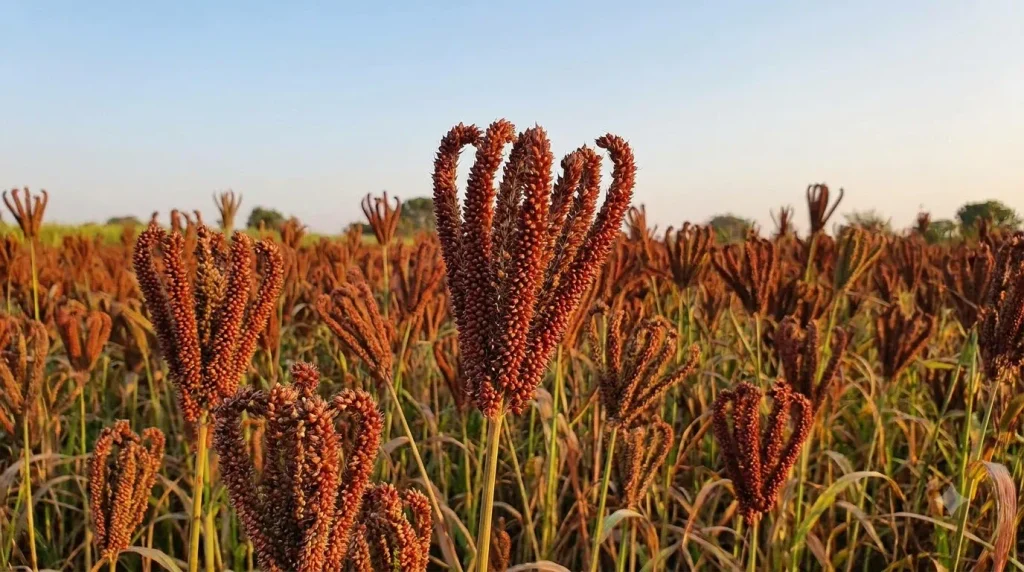
Among cereals, finger millet is particularly notable for its impressive calcium content. Published reviews report approximately 344 mg of calcium per 100 g of grain, although nutrient values naturally vary according to the variety, growing conditions, and processing.
Alongside calcium, ragi provides dietary fibre, protein, potassium, magnesium, and other essential minerals, making it a highly nutritionally interesting alternative to relying predominantly on refined cereal staples. For populations where dietary diversity might be limited, deliberately incorporating nutrient-rich traditional grains like ragi can be especially valuable.
Ragi’s nutritional appeal certainly does not end with minerals. The grain contains a wealth of polyphenols, phenolic acids, flavonoids, and other phytochemicals, many of which are heavily concentrated in the outer layers of the grain. These powerful compounds contribute directly to the antioxidant capacity of finger millet and are a major part of what makes whole-grain ragi nutritionally distinctive.
However, there is an important nutritional nuance to understand. Some of the exact same compounds present in millet can also interact with minerals and negatively affect their absorption in the human body. This is precisely where traditional processing becomes incredibly interesting.
Ragi contains phytates and tannins, which are compounds that can bind minerals and potentially reduce their overall bioavailability. Traditional fermentation can beautifully change this nutritional equation.
Studies focusing on fermented finger-millet preparations have actually found remarkable reductions in phytate and tannins, alongside significant improvements in the bioaccessibility of vital minerals including iron, zinc, and calcium. In other words, fermentation does not simply change the tangy flavour and creamy texture of ragi. It fundamentally changes how nutrients are made available from the grain to our bodies. Furthermore, research on finger-millet porridge has shown that germination and fermentation can positively influence amino acids, phenolic compounds, and antioxidant activity, although the final outcome depends heavily on the exact processing conditions utilized.
Ragi Pej perfectly illustrates a vital principle in modern nutrition: the nutritional value of a food is influenced not only by what the food contains, but also by how it is processed. The combination of a calcium-rich grain, dietary fibre, plant bioactives, and traditional fermentation makes ragi pej a stellar example of food-based nutrition deeply rooted in local food knowledge.
It powerfully reminds us that traditional foods should absolutely not be dismissed as “old-fashioned”. In fact, some traditional practices are increasingly being examined and validated through the lens of modern food science. A nutrient-rich food does not have to be imported, highly processed, or expensively marketed as a “superfood”. Sometimes, it is simply a grain that communities have thoughtfully cultivated and consumed for generations. At Aadim, the belief is strong that preserving these traditional foods is inherently about preserving the crucial nutritional diversity they bring to our fragile food systems. From traditional grain to modern nutrition, the future of food is frequently already rooted in our past.